


SEO for Nepali Businesses: A Beginner's Guide to Ranking on Google in 2026
If you run a business in Nepal and your website barely gets any visitors from Google, you are not alone. Most small and medium businesses here either ignore SEO completely or treat it as something mysterious that only tech people understand. The truth is simpler than you think. SEO is just the process of making your website easy for Google to understand and easy for your customers to find.
This guide breaks down exactly what SEO means in 2026, what actually moves the needle for a Nepali business, and where to start if you are doing this for the first time.
Why SEO Matters More Than Ever in 2026
Search behavior has changed a lot over the past few years. People no longer type a business name into Google and hope for the best. They search things like "best momo in Baneshwor" or "affordable web design company in Kathmandu" and expect Google to hand them a relevant answer instantly.
If your website is not optimized, you simply will not show up, even if your business is excellent. And with tools like Google AI Mode and ChatGPT now pulling information directly into search results, the way people discover businesses is shifting again. We covered this shift in detail in our post on what AI search means for Nepali businesses, which is worth a read once you finish this one.
Step 1: Understand What Google Is Actually Looking For
Google's job is to give searchers the most relevant, trustworthy, and useful result. It does this by crawling your website, reading your content, and judging it against hundreds of ranking factors. You do not need to memorize all of them. You just need to focus on the ones that matter most for a small business site.
Google publishes its own official guidelines on this, and it is worth skimming through the Google Search Essentials page at least once so you understand the basics straight from the source.
Step 2: Do Simple Keyword Research First
Before writing a single word on your website, figure out what your customers are actually typing into Google. A trekking company should not be targeting "best travel agency" when real searchers are typing things like "Everest Base Camp trek package price."
You do not need expensive tools to start. Google's autocomplete, the "People also ask" section, and even asking your existing customers how they searched for your services will give you a solid starting list of keywords.
Step 3: Fix Your On Page SEO
On page SEO simply means optimizing the actual content and structure of your website pages. For most Nepali business websites, this comes down to a few basics that are often ignored.
Your page titles and meta descriptions should clearly describe what the page is about and include the keyword you are targeting. Your headings should be organized properly, with one clear H1 and logical H2s underneath it. Your content should actually answer the question the searcher had in mind, not just repeat your keyword over and over.
Step 4: Do Not Ignore Technical SEO
This is the part most business owners skip entirely, and it is often the reason a well written website still does not rank. Site speed, mobile friendliness, and how Google crawls your pages all matter.
We recently wrote about one technical detail that trips up a lot of larger websites in our post on Google's crawl limit and why the 2MB rule matters. Even if your site is small, it is a good example of how technical issues can quietly hurt your rankings without you ever noticing.
You can check your own site's speed and mobile usability for free using Google PageSpeed Insights.
Step 5: Claim and Optimize Your Google Business Profile
If you serve local customers in Kathmandu, Pokhara, or anywhere else in Nepal, this single step can bring in more customers than almost anything else on this list. Setting up your Google Business Profile properly, with accurate hours, photos, your address, and a few reviews, is often what determines whether you show up when someone nearby searches for your service.
Step 6: Create Content That Actually Helps People
Google rewards websites that consistently publish useful, original content. This does not mean you need to write ten blog posts a week. It means every piece of content should genuinely help the person reading it, whether that is answering a common customer question, explaining your pricing, or sharing something useful about your industry.
Step 7: Build a Few Quality Backlinks
Backlinks are links from other websites pointing to yours, and they still matter a lot for rankings. For a Nepali business, this could be as simple as getting listed on local business directories, getting mentioned by a local news site, or partnering with other businesses for cross promotion. Quality matters far more than quantity here. A handful of relevant, trustworthy links will do more for you than a hundred spammy ones.
Step 8: Track Your Progress
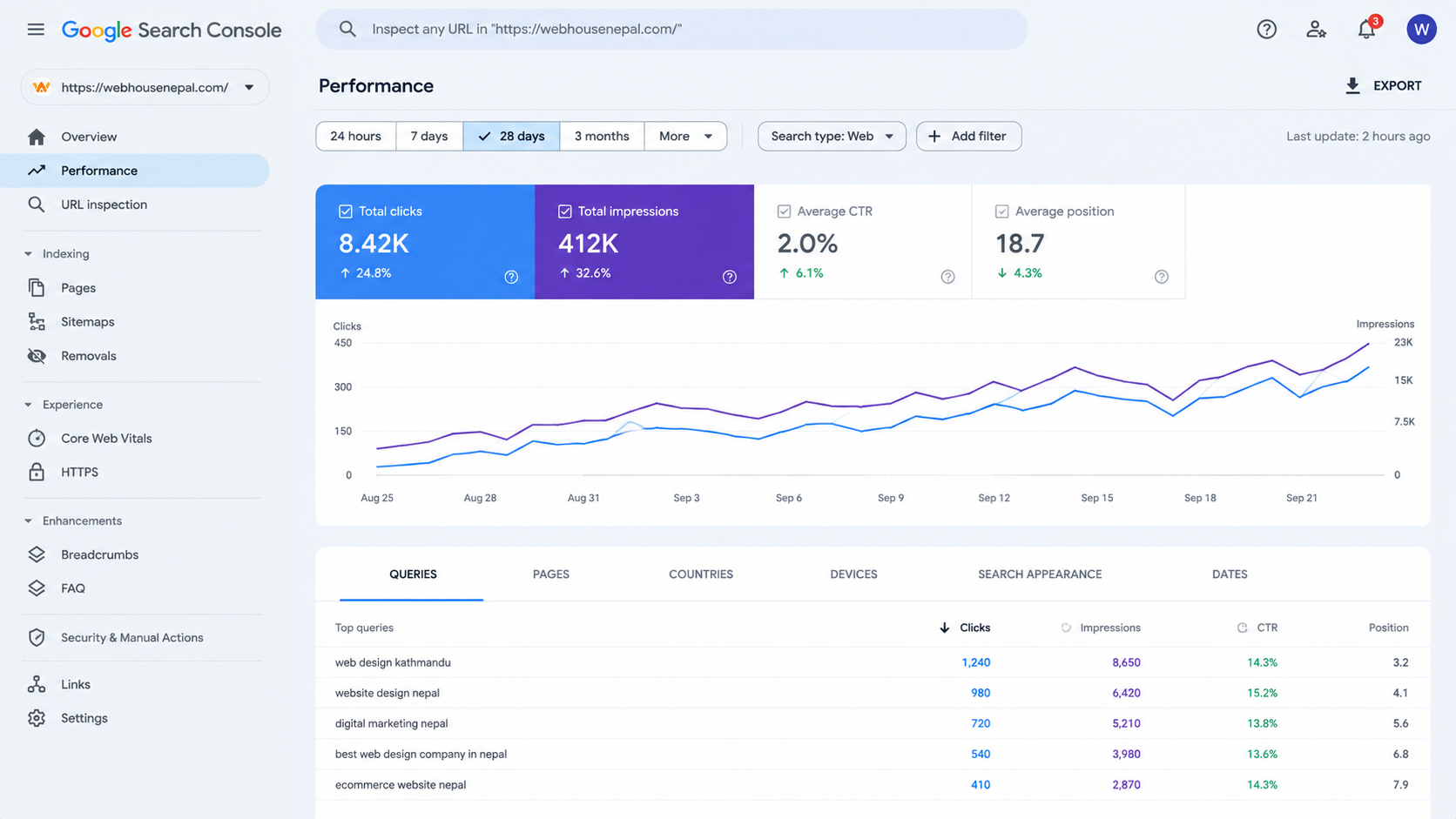
SEO is not something you do once and forget. Set up Google Search Console, which is free, and check it monthly to see what keywords are bringing traffic, which pages are performing, and whether Google is running into any crawling errors.
How Long Does SEO Actually Take?
This is the question every business owner asks, and the honest answer is that it varies. For a new website with no history, expect three to six months before you see meaningful movement, and longer for competitive keywords. SEO is a long term investment, not a quick fix, and anyone who promises you first page rankings within a week is not being honest with you.
Getting Started
If all of this feels like a lot to manage on top of running your actual business, that is completely normal. Most business owners in Nepal do not have the time to learn SEO, run it consistently, and still focus on their core work. You can check our SEO services and SEO pricing to see how we help businesses like yours get found on Google, or simply request a quote and we will walk you through where your web