Home / Blogs / Is Your Website Ready for AI Search? What ChatGPT and Google AI Mode Mean for Nepali Businesses
Something changed in the last two years and most business owners in Nepal have not noticed yet.
People are still searching. They are just not always landing on your website afterwards. They ask ChatGPT which web development company to hire. They type a question into Google and read the answer box at the top without scrolling. They ask Gemini to compare three services and take the summary at face value.
Your website might still be ranking. It might still be perfectly built. And your inquiries might still be dropping.
This post is about understanding what is actually happening, working out whether it affects your business, and knowing what to do about it. No panic, no hype.
Two separate things get bundled under this label, and it helps to keep them apart.
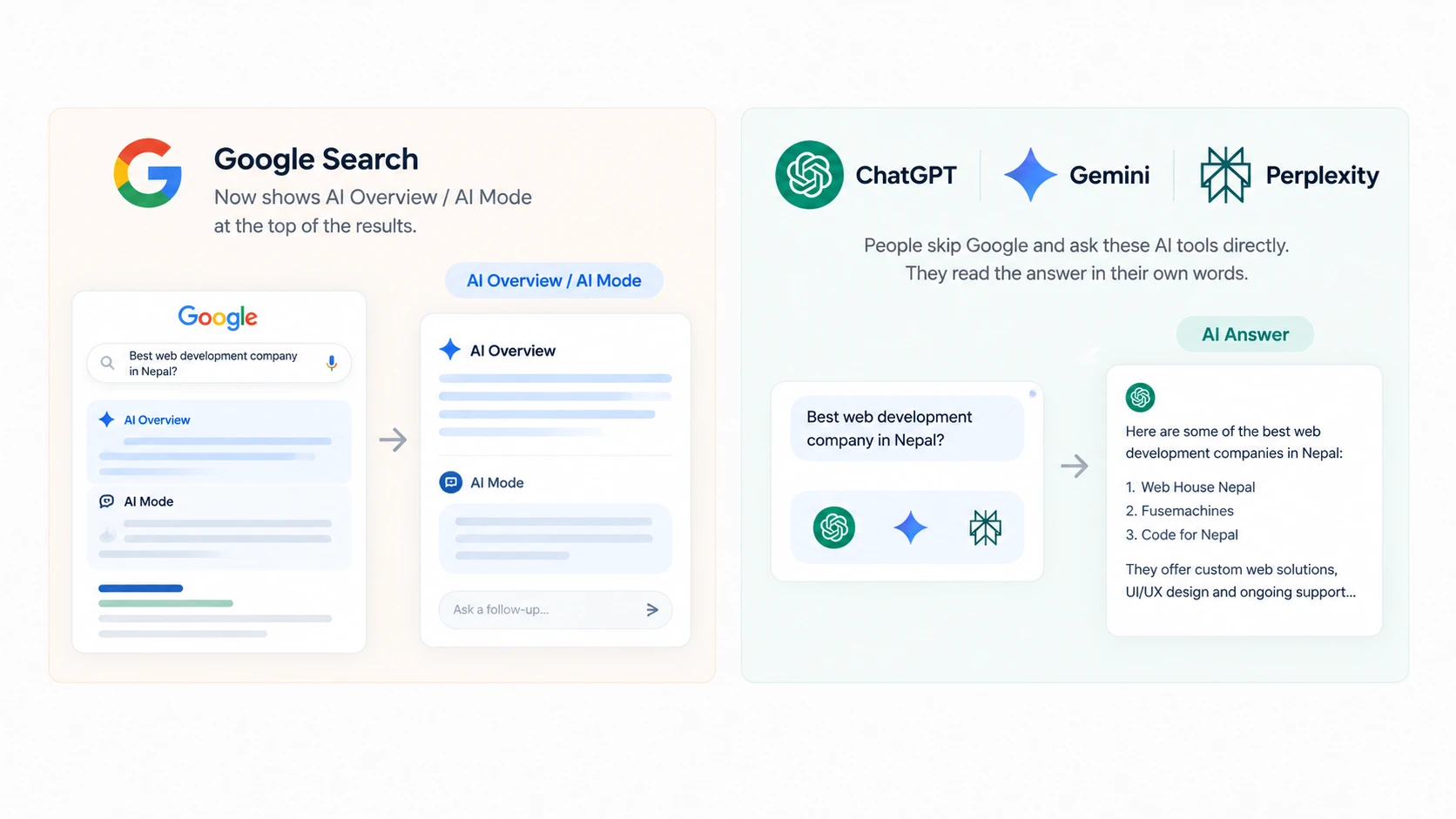
The first is AI inside Google. When you search now, Google often puts a generated summary at the top of the page before the normal blue links. That is AI Overviews. Google has also built a fuller conversational version called AI Mode, where you ask a question, get an answer, then ask a follow up without ever seeing a traditional results page.
The second is people skipping Google entirely. They open ChatGPT, Gemini, Perplexity or Claude and just ask. These tools read the web and answer in their own words, sometimes citing sources, sometimes not.
Both matter. But they behave differently, and the fix is not the same for each.
You will see a lot of alarming statistics about this. Some are exaggerated. Here is what seems reasonably well supported.
AI Overviews now appear on roughly one in five Google searches globally, though it varies a lot by country and by query type. They show up far more on informational questions (how does X work, what is the best Y) than on direct navigational searches.
When an AI Overview does appear, clicks to the top ranking pages drop. Ahrefs, analysing hundreds of thousands of keywords, found an average click through rate decline of around 34 percent for the top result. Other studies put the number higher or lower depending on methodology.
And roughly half of all Google searches now end without the user clicking anything at all.
Read that carefully though, because the framing matters. This does not mean half your traffic is gone. It means informational searches are increasingly answered on the results page, while searches where someone actually wants to do something, hire a company, get a quote, book a service, still send people to websites. Often better qualified people than before, because the AI has already filtered out the browsers.
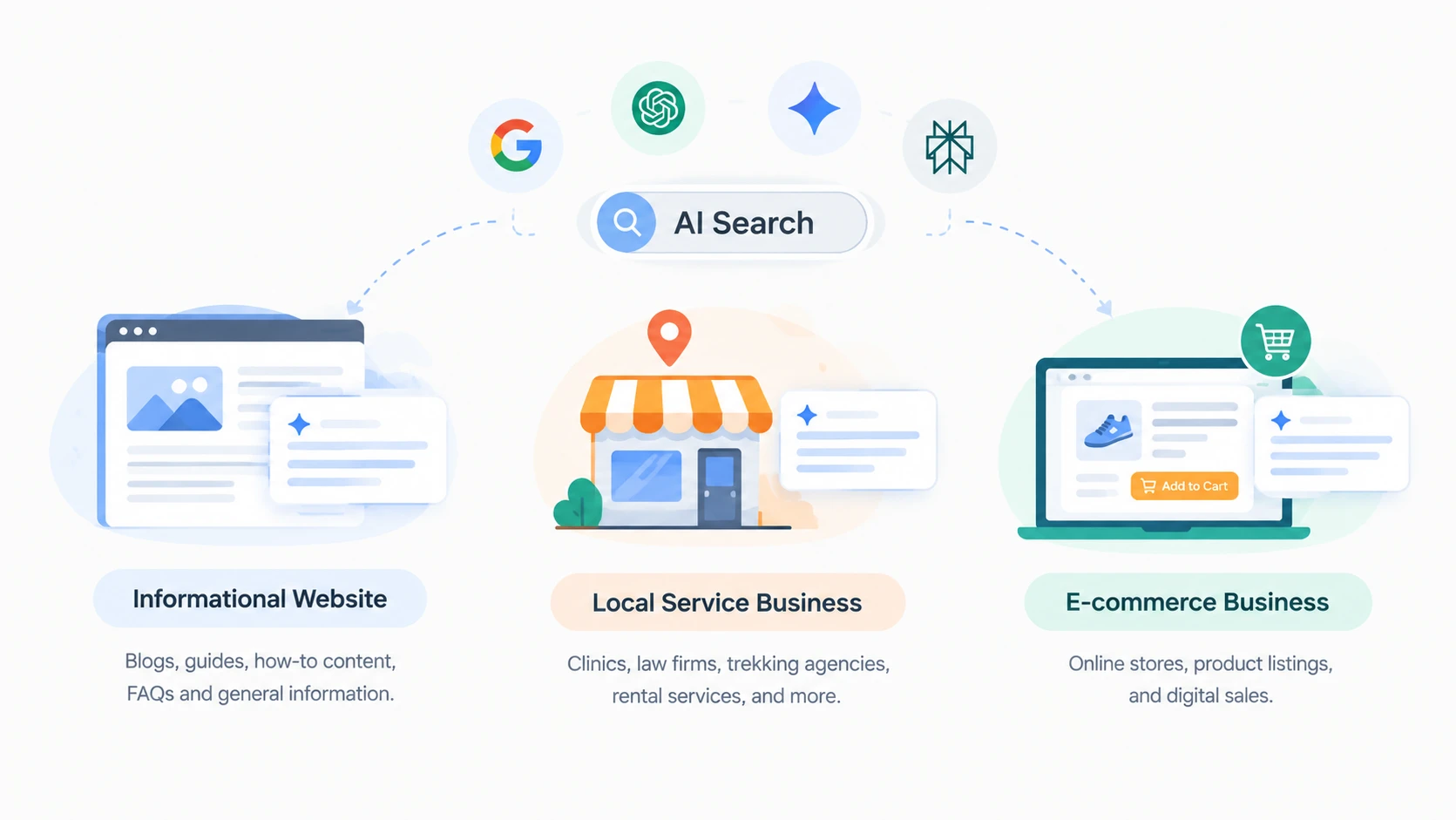
Not everyone equally.
If your website is mostly informational, general blog content, definitions, how to guides, basic explainers, you are the most exposed. That is exactly the content AI answers best, and exactly the traffic that is disappearing first.
If your website exists to generate inquiries for a local service, a clinic in Baneshwor, a law firm in Putalisadak, a trekking agency, a rental business, you are far less exposed. Nobody asks ChatGPT for directions to your office and then books through ChatGPT. They still need to reach you.
If you sell products online, you are somewhere in the middle. Product research is moving into AI. The actual purchase is not.
And if your business has no website at all and runs entirely on a Facebook page, the honest answer is that AI search makes that position worse, not better. AI tools cite websites. They rarely cite Facebook posts. We have written separately about whether a website or social media is better for a Nepali business, and AI search has made that argument more one sided than it used to be.
Here is the part that surprises people.
Google's own documentation on AI features and your website says plainly that there are no additional requirements to appear in AI Overviews or AI Mode, and no special optimisations necessary. No magic file to upload. No secret schema to add. No new checklist to buy from an agency.
What Google recommends instead is almost boring: helpful content written for people, clean technical setup, crawlable pages, good internal linking, accurate structured data, real business information, fast loading.
In other words, the things that made a website work in 2020 are broadly the things that make it work in AI search now. The bar has just gone up, because average content no longer gets rewarded with average traffic. It gets absorbed into a summary and forgotten.
That is why the businesses panicking about AI search are usually the ones whose websites were already weak. The fundamentals did not change. The tolerance for ignoring them did.
Run through these honestly.
Can AI tools actually read your site? This sounds basic but it fails more often than you would expect in Nepal. If your key content sits inside images, inside a slider, or loads only after heavy JavaScript, AI crawlers may never see it. Page weight matters too. Google's updated crawl limit and the 2MB rule is worth understanding here, because content that never gets crawled never gets cited.
Does your site answer real questions directly? AI tools pull from content that states things clearly. A page that takes four paragraphs to get to the point is less useful to them than one that answers in the first two sentences and then explains.
Is your business information consistent everywhere? Name, address, phone number, services, the same on your website, your Google Business Profile, your Facebook page and every directory you are listed in. AI tools cross reference. Contradictions make them cautious about citing you.
Do you have structured data in place? Not because it is an AI requirement, it is not, but because it removes ambiguity about what your pages are.
Can you publish without calling a developer? This matters more than it sounds. AI search rewards sites that stay current. If every content update requires an email and a three day wait, your site will go stale. Our guide to choosing the right content management system covers what to look for.
Are you saying anything that only you can say? This is the big one. Generic content is exactly what AI replaces. Your actual pricing, your actual process, your actual experience with clients in Nepal, your photographs, your case studies. An AI model cannot generate that because it does not have it. It has to cite you.
Are you visible where AI tools look? Being mentioned on other reputable sites, directories, local publications, industry lists, feeds into how often you get cited. Our post on how to get your website cited by ChatGPT, Gemini and AI search goes into the practical side of this in detail.
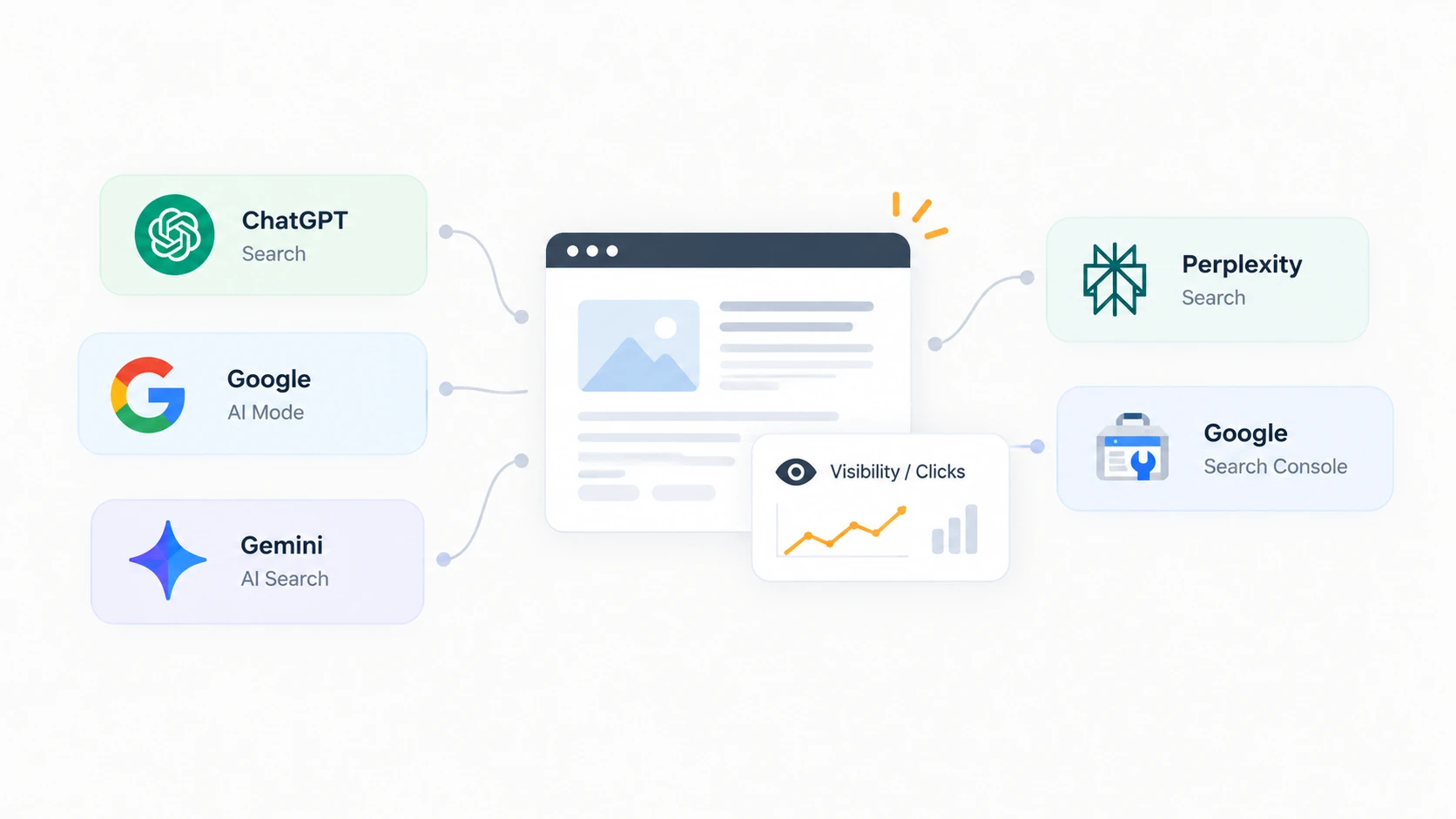
Do this today, it takes fifteen minutes.
Open ChatGPT and ask it the question a customer would ask before hiring you. "Which are the best web development companies in Kathmandu?" or "Where can I rent a jeep for Mustang in Nepal?" See whether your business comes up. Then try the same question in Gemini and Perplexity.
Then search the same thing in Google and look at whether an AI Overview appears, and who it cites.
Finally, open Google Search Console and compare your impressions to your clicks over the last twelve months. If impressions are steady or rising while clicks fall, that is the AI effect showing up in your own data, not in someone's blog post.
That last check is the honest one. Everything else is theory until you see it in your own numbers.
If you are a small business in Nepal reading this, here is a reasonable order of priority.
Fix the fundamentals before chasing anything AI specific. A fast, crawlable, well structured website with real content is the entire foundation, and most sites in Nepal are not there yet.
Shift your content toward things AI cannot answer for you. Prices, process, local specifics, your own experience. Move away from generic explainer content that adds nothing to what already exists online.
Do not abandon SEO. The businesses claiming SEO is dead are usually selling something else. AI tools are built on top of search, and sites that rank well are the sites they cite. If you do not have the capacity to do this in house, outsourcing SEO is a reasonable option.
Keep a paid channel running as a hedge. Organic visibility is less predictable than it was. If you are weighing options, our comparison of Facebook Ads versus Google Ads for Nepali businesses is a useful starting point.
And get your build right. A website put together cheaply, with the content locked in images and no ability to update it, will struggle in AI search for the same reason it struggled in normal search. If you are at that decision point, we have written about how to choose the right web development company and the tradeoffs between hiring a company and a freelancer.
AI search is real and it is changing how people find businesses. It is not the end of websites. If anything it raises their value, because a website is the only asset in this system that you actually own and that AI tools can actually read.
What it does end is the era of getting traffic from mediocre content. That was always borrowed time.
If your website is fast, clear, honest about what you do, and says something only you can say, AI search is closer to an opportunity than a threat. If it is not, the problem was never AI.
For more on how this is reshaping the industry generally, see our piece on the impact of AI on the web industry.